

Quick Verdict
Lantern is closer to a circumvention tool than a full traditional VPN. That distinction matters. It may appeal to users looking for simple access, but it should not be treated the same way as a full paid VPN with mature apps, account support and clearer privacy expectations.
Users who understand proxy-style tools and only need a lightweight access option.
Anyone handling work accounts, payments, private documents or long-term travel without a safer backup.
Use a known paid VPN such as StrongVPN or ExpressVPN when privacy, support and refund terms matter.
Lantern VPN Review: Restrictive-Network Use, Privacy Risks and Safer Alternatives
Lantern is often searched by users who want a quick way around blocked networks, but quick tools are not always safe tools. If privacy, account security or work access matters, Lantern should be evaluated carefully rather than treated as a long-term VPN solution.
Quick verdict
Where Lantern VPN makes sense
Hotels, airports, cafes and coworking spaces are the most realistic places where a VPN adds immediate value.
Always test the exact platform, device and server during the hours you actually plan to watch.
Avoid permanent promises. Test before relying on any provider, and keep a second route ready.
Email, banking, ticketing and work tools deserve more caution than casual browsing.
Strengths and limits
| Strengths | Limits |
|---|---|
|
|
How to test it properly
- Install the VPN before you enter a restrictive or unfamiliar network.
- Test at least two protocols and three server locations.
- Check desktop, mobile and TV devices separately.
- Try your real use case: streaming, work login, email, game client or messaging app.
- Keep a backup provider ready if access is important.
Refund-window test plan
The first few days after purchase are the most important. Do not simply connect once and assume the VPN is ready. Run a practical test plan: one session on home Wi-Fi, one session on mobile data, one session on public Wi-Fi if possible, and one session during evening peak hours. If the VPN is meant for travel, install it on your phone and laptop before departure rather than waiting until you are already on a restrictive network.
For streaming, test the real app instead of only opening the homepage. For work, test email, cloud documents, video meetings and two-factor authentication. For restrictive-network use, test multiple protocols and keep notes about which server and protocol actually worked. This is the difference between a casual VPN review and a setup that will still help when the network becomes difficult.
Device notes
Desktop apps usually give you more control over protocols and diagnostics, while mobile apps are what most travelers actually rely on in airports, hotels and taxis. TV devices are the hardest to judge because streaming apps, DNS behavior and account regions can interact in unpredictable ways. If your main use case is a television or streaming box, test that device directly instead of assuming desktop results will carry over.
Best alternatives by buyer profile
| Buyer profile | Best route | Why |
|---|---|---|
| Budget-first user | StrongVPN | A cleaner first stop when you want a paid VPN without paying premium-brand prices. |
| Frequent traveler | ExpressVPN | A stronger premium backup for hotel Wi-Fi, airports and networks where fast switching matters. |
| Many devices | Surfshark | Worth comparing when phones, laptops, tablets and family devices all need coverage. |
FAQ
Can this VPN guarantee access on restrictive networks?
No. restrictive-network access changes by location, ISP, device and protocol. A realistic guide should focus on testing and backup planning.
Should I use a free or cracked VPN instead?
No for anything important. Free and cracked VPN apps can be slow, unstable, privacy-invasive or unsafe to install.
What is the safest buying approach?
Pick one main VPN, test it during the refund window, and keep one backup option ready before you travel or need urgent access.
Recommended VPN route for this page
This page is about Lantern VPN review: Privacy Risks and Safer Alternatives, but the buying decision should still come back to practical VPN checks: stable apps, refund terms, public Wi-Fi safety, device support and a tested backup. Use the reusable Dr.Wall VPN blocks below to compare the providers we keep updated across the English site.

- StrongVPN encrypts your internet traffic, making it nearly impossible for anyone to spy on your online activities.
- It hides your IP address to prevent third parties from tracking your location.
- StrongVPN creates a secure, private tunnel for your data, protecting your information from hackers and other cyber threats.
- With a wide range of server locations, you can easily find one that best suits your needs.
- StrongVPN uses the latest technology to ensure your connection is both secure and fast, giving you a worry-free browsing experience.
- Their customer support is available 24/7, so help is always just a click away whenever you need it.
- A money-back guarantee lets you try the service risk-free.
- StrongVPN offers easy-to-use apps for all major platforms, so you can stay protected on any device.
- You can connect up to 5 devices simultaneously with one account, keeping all your devices secure.
- StrongVPN is one of the most affordable VPN services on the market, making it one of the best choices available.
- It also features a fully localized multilingual interface, making it user-friendly for multilingual users.
Founded in 2004, StrongVPN is a product of the publicly traded U.S. company J2 Global. As the only VPN encryption software operated by a publicly listed company, StrongVPN stands out for its credibility and reliability. With a market capitalization of approximately USD 1.4 billion and over 17 years of operational history, StrongVPN is widely regarded as one of the most trustworthy VPN providers in the world.
Unlike smaller VPN providers or self-hosted SSR solutions, large companies like StrongVPN typically rely on high-speed encrypted nodes provided by top-tier cloud platforms such as Amazon Web Services, Google Cloud, and Oracle. These premium infrastructures offer greater stability and are far less likely to be blocked by firewalls, making StrongVPN a more reliable choice for bypassing internet restrictions.
Note: Below is a brief overview of StrongVPN’s advantages and features. For a more detailed guide on how to use and install StrongVPN, please refer to our dedicated article: “StrongVPN User Guide.”
Key Advantages of StrongVPN
・Robust Privacy Protection
One of the biggest concerns with SSR-based solutions is the exposure of your original IP address. Unlike VPN protocols that establish an encrypted tunnel before transmitting data, many SSR-based tools are inherently less secure. Even popular tools like Lantern VPN and PandaVPN are not immune to this issue.
StrongVPN, on the other hand, offers significantly better protection. Tests using professional IP-checking tools confirm that StrongVPN can completely mask your real IP address. Once connected, only the IP address of the foreign server is visible—keeping your online identity safe from prying eyes.
・Excellent Speed Performance
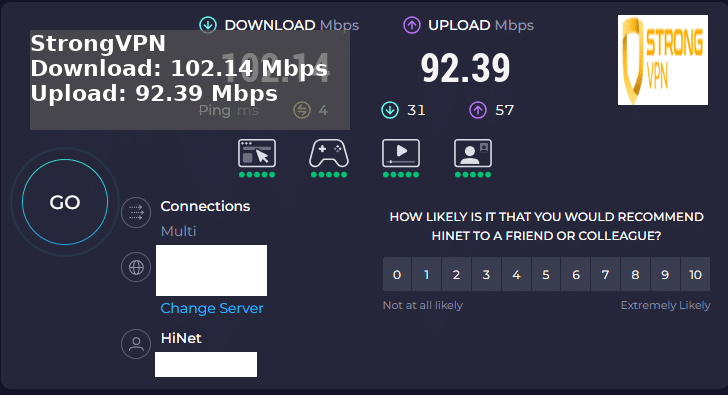
Thanks to its backing by a large, well-funded company, StrongVPN outperforms most smaller VPN or proxy services in terms of speed and stability. Its dedicated tech team ensures that server nodes are promptly updated in response to changes in firewall technology, maintaining a high success rate for bypassing restrictions.
Check out the most recent 2026 speed tests below.


Extra months on selected plans · Automatic protocol switching · 30-day money-back guarantee
ExpressVPN: A World-Renowned VPN Provider Offering Top-Tier Security and Performance
Company Background
Founded in 2009, ExpressVPN is headquartered in the British Virgin Islands. While details about its ownership remain private, the company has consistently maintained a transparent approach in its operations, with a strong focus on privacy and security.
Key Features
ExpressVPN supports multiple VPN protocols including OpenVPN (UDP/TCP), IKEv2, L2TP/IPSec, and their own proprietary Lightway protocol. It uses AES-256 encryption—the industry standard for military-grade security. ExpressVPN also enforces a strict no-logs policy, meaning it does not collect or store any user activity data.
Servers and Locations
With an extensive network of servers in over 90 countries, ExpressVPN offers fast, stable, and reliable connections for users around the globe. Its broad coverage allows users to bypass geo-restrictions and access global content with ease.
Device Compatibility
ExpressVPN is compatible with a wide range of devices and platforms, including Windows, macOS, iOS, Android, Linux, routers, and smart TVs. One account can be used on up to 5 devices simultaneously.
Customer Support
ExpressVPN provides 24/7 customer support through live chat and email. Their official website also features a comprehensive library of tutorials and troubleshooting guides to help users resolve any issues efficiently.
Privacy and Security Features
ExpressVPN includes several advanced privacy tools, such as a kill switch (called “Network Lock”), split tunneling (which allows users to choose which apps use the VPN), and DNS leak protection—all designed to keep your data safe at all times.
Transparency and Audits
To back up its no-logs policy and ensure compliance with the highest security standards, ExpressVPN regularly publishes transparency reports and undergoes independent third-party audits.
- ExpressVPN is one of the most popular VPN services on the market, trusted by over 10 million users worldwide.
- It offers top-tier security with 256-bit encryption and a strict no-logs policy to ensure your privacy is always protected.
- ExpressVPN is compatible with a wide range of devices, including Windows, macOS, iOS, Android, and Linux.
- With over 3,000 servers in 94 countries, ExpressVPN provides extensive global coverage for fast and reliable connections.
- It offers unlimited bandwidth and server switching, making it perfect for streaming, gaming, and other high-demand activities.
- Customer support is available 24/7 through live chat and email, ensuring help is always just a click away.
- ExpressVPN comes with a 30-day money-back guarantee, so you can try it risk-free.
- It is often used by travelers and remote workers who need a polished app, strong device support and reliable privacy features.
- In our use, ExpressVPN is usually strongest when reliability, app quality and quick server switching matter more than chasing the cheapest plan.
- Overall, ExpressVPN is a top-tier, all-around VPN solution that combines excellent features with outstanding performance.
ExpressVPN offers a 30-day money-back guarantee and is a well-established VPN provider popular among users in the US, Europe, and other Western markets. With a massive and reliable user base, there's basically no worry about it disappearing or running off. It has servers in 105 countries worldwide, with over 3,000 servers in total.
Note: Below is a practical overview of ExpressVPN's key advantages and features. For a detailed breakdown of its functions, setup guide, and more, check out the “ExpressVPN Usage Guide” article.


ExpressVPN offers dedicated servers optimized specifically for users on restrictive networks, eliminating the hassle of manually testing different nodes. These special configurations are designed to provide fast and stable access for handling restrictive networks. If you're looking for a simple, one-click solution to access the open internet, ExpressVPN is an excellent choice.
Dedicated R&D Team for the international Market
ExpressVPN is one of the better-known international VPN providers with long-running support for restrictive network environments. This matters because restrictive networks change often, and a VPN without ongoing maintenance can stop working quickly.
One-Click Speed Test
With ExpressVPN’s built-in Speed Test feature, users can instantly check the performance of all available servers. This makes it easy to choose the best server based on speed and latency, without the need for manual testing.


Unlike many other VPN services that require users to manually test each server for speed and latency—often wasting time without clear results—ExpressVPN makes the process simple and efficient.
With just one click on the “Speed Test” feature in the ExpressVPN app, users can instantly run tests across all available server locations. Based on the results, you can easily choose the best server with the lowest latency and fastest speeds, saving time and ensuring optimal performance.
Real-World Speed Notes
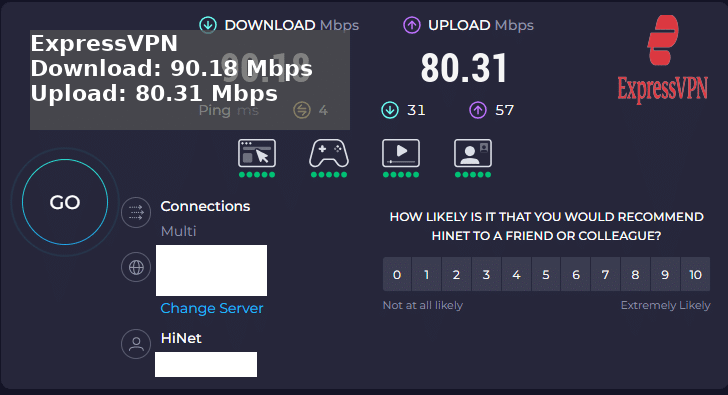
While many bloggers make unfounded VPN recommendations, I aim to provide honest, real-world results. Below is a screenshot from a recent ExpressVPN speed test. The connection was made through a Japanese server—and the results were impressive.
ExpressVPN Summary
ExpressVPN is a top-tier VPN provider offering exceptional levels of security and privacy. However, it comes at a slightly higher price point compared to some competitors.
Its powerful encryption makes it extremely difficult for anyone to intercept your data or compromise your device. ExpressVPN also features a kill switch, which automatically blocks all internet traffic if the VPN connection drops—helping prevent data leaks.
The service adheres to a strict no-logs policy, meaning it does not store any records of your online activity.
Bottom line: ExpressVPN delivers a premium VPN experience with high-level privacy and security features, though it may be considered a bit expensive. For users who prioritize reliability, performance, and safety, it remains one of the stronger choices on the market.

Unlimited devices · Automatic protocol switching · 30-day money-back guarantee
Surfshark: High-Quality VPN at a Competitive Price
Company Overview:
Founded in 2018 and based in the British Virgin Islands, Surfshark has quickly risen to prominence in the VPN industry. Despite being a relatively new player, it has earned widespread praise from users and cybersecurity experts alike for its reliability and innovation.
Key Features:
Surfshark supports a variety of VPN protocols, including OpenVPN, IKEv2, and their custom implementation of Shadowsocks. It uses AES-256 encryption, the highest standard in the industry, and enforces a strict no-logs policy, ensuring your online activity remains private.
Servers & Locations:
Surfshark operates 3,200+ servers in over 60 countries, offering users excellent global coverage for fast speeds and easy access to geo-restricted content.
Device Compatibility:
One of Surfshark’s standout features is its unlimited simultaneous device connections—a rare offering among VPN providers. It supports all major platforms including Windows, macOS, iOS, Android, and Linux, as well as Fire TV, Apple TV, smart TVs, gaming consoles, and routers.
Customer Support:
Surfshark offers 24/7 customer service via live chat and email. Their website also features extensive tutorials and a helpful knowledge base.
Additional Features:
- CleanWeb: Blocks ads, trackers, and malware.
- Whitelister: A split tunneling feature allowing selected apps or websites to bypass the VPN.
- MultiHop: Routes your connection through two VPN servers for enhanced security and privacy.
Pricing & Refund Policy:
Surfshark offers highly competitive pricing and backs its plans with a 30-day money-back guarantee, letting you try it risk-free.
Conclusion:
Although a newer entrant in the market, Surfshark stands out by combining top-tier security, advanced features, and unlimited device connections at an affordable price. It's a strong contender against more established VPN providers and an excellent choice for users who prioritize both privacy and value.
Surfshark is one of the better-known consumer VPN brands, especially for households that need many devices on one subscription. Its strength is convenience: apps are easy to install, device limits are generous, and obfuscation-related settings can help in some restrictive network environments.
・Enjoy Fully Automated Server and Protocol Selection
No manual setup needed—Surfshark intelligently chooses the best server and protocol for your connection, ensuring optimal speed and reliability every time.

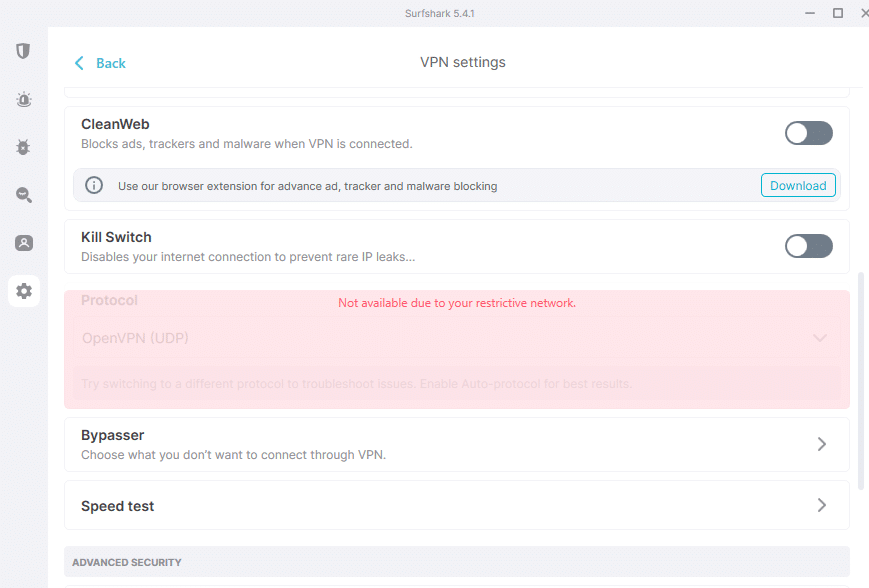
Surfshark offers obfuscation-related features for restrictive networks. Results can still vary by ISP, device and local network conditions, so it is best treated as a convenient, good-value option rather than a guaranteed fix for every connection problem.
Speed and Value Notes


Based on real-world testing, Surfshark delivers exceptional speed when connected through its SS nodes. In head-to-head comparisons, Surfshark outperforms many competitors in terms of latency, stability, and streaming capability for users on restrictive networks.
Surfshark Feature: Unlimited Devices
Unlike most VPN providers—such as StrongVPN, ExpressVPN, or FlowVPN—which typically cap simultaneous connections at 5 devices, Surfshark allows unlimited simultaneous connections. For most individuals, 5 devices may be sufficient to cover a phone, laptop, and tablet. However, if you plan to share your VPN with family members or stream content together on multiple devices (like watching Netflix as a group), that limit can quickly become restrictive. That’s where Surfshark truly stands out.
Why Choose Surfshark?
We believe Surfshark is one of the best VPNs available today for many reasons—but one of the most compelling is its support for unlimited devices under a single subscription. This means you can protect the entire household's online activities without worrying about hitting device limits.
Since Surfshark charges a flat monthly fee regardless of the number of connected devices, it offers outstanding value, especially when compared to VPNs that charge based on the number of users or connections.
In addition, Surfshark includes a wide range of premium features such as:
- Strict no-logs policy
- Military-grade AES-256 encryption
- Built-in ad and malware blocker (CleanWeb)
Even if you're not tech-savvy, Surfshark’s intuitive apps make it easy to stay protected across all your devices.
If you're looking for a VPN solution that keeps your entire family safe online—without limitations—Surfshark is your best choice.
My Speed Tests on These Four VPNs
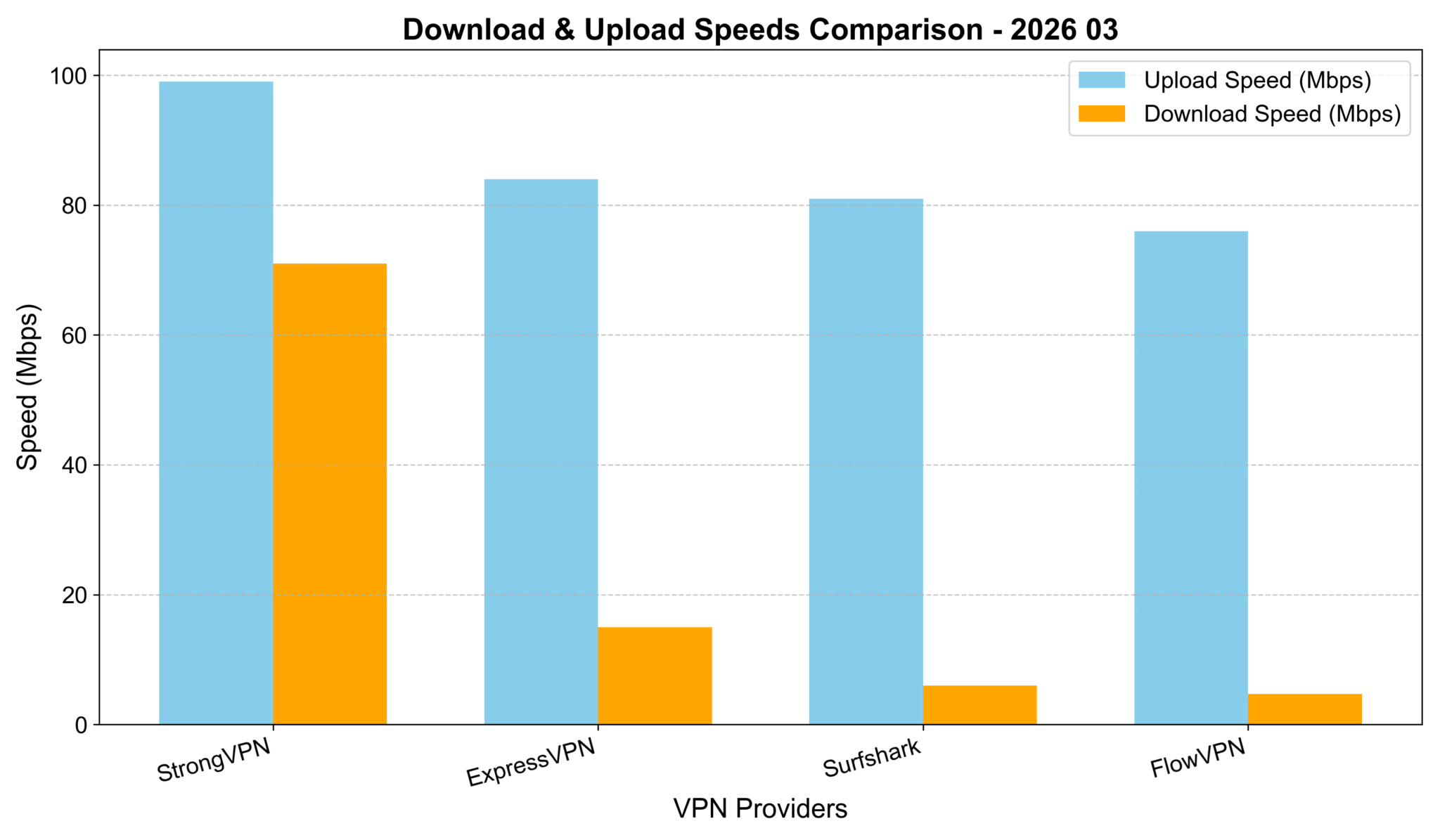
I tested these four VPNs in real-world browsing and streaming conditions, with routes that are relevant for Asia-Pacific users. Absolute speeds aren't the key factor here—they depend heavily on your local Wi-Fi, mobile data, or ISP baseline. But as you can see from the chart below, StrongVPN delivered the highest download speeds, followed closely by ExpressVPN and Surfshark. The differences were minor (all within about 10% of each other), so they're all solid performers on the same scale.
VPN Testing Methodology – Detailed Report
How to read this test: the numbers are a practical snapshot, not a universal promise. Your own speed will depend on your ISP, Wi-Fi quality, device and chosen server.
- Select VPN Services Chosen based on reputation, features, and user feedback: StrongVPN, ExpressVPN, Surfshark, and others like FlowVPN.
- Choose Test Locations Focused on major cities/regions in Asia (e.g., Tokyo-area equivalents, Hong Kong, Singapore, etc.) for relevant comparisons.
- Testing Tools Used reliable online tools like Speedtest.net and Fast.com to measure download speed, upload speed, and latency.
- Baseline Test Ran speed tests without any VPN connected to establish the baseline internet speed.
- VPN Connection & Testing Connected to each VPN one by one, selecting servers in the target locations, and ran multiple speed tests per service.
- Record & Compare Results Logged download/upload speeds and ping, then compared everything against the baseline.
- Repeat Across Time Slots To ensure accuracy, repeated tests at different times of day (morning, afternoon, evening) over several sessions.
- Compile Report Aggregated the data into charts and summaries, highlighting key findings, methodology, and why certain VPNs edged out in specific scenarios.
Cheapest VPN Options? Pricing & Speed Breakdown (My Hands-On Tests – March 2026 Update)
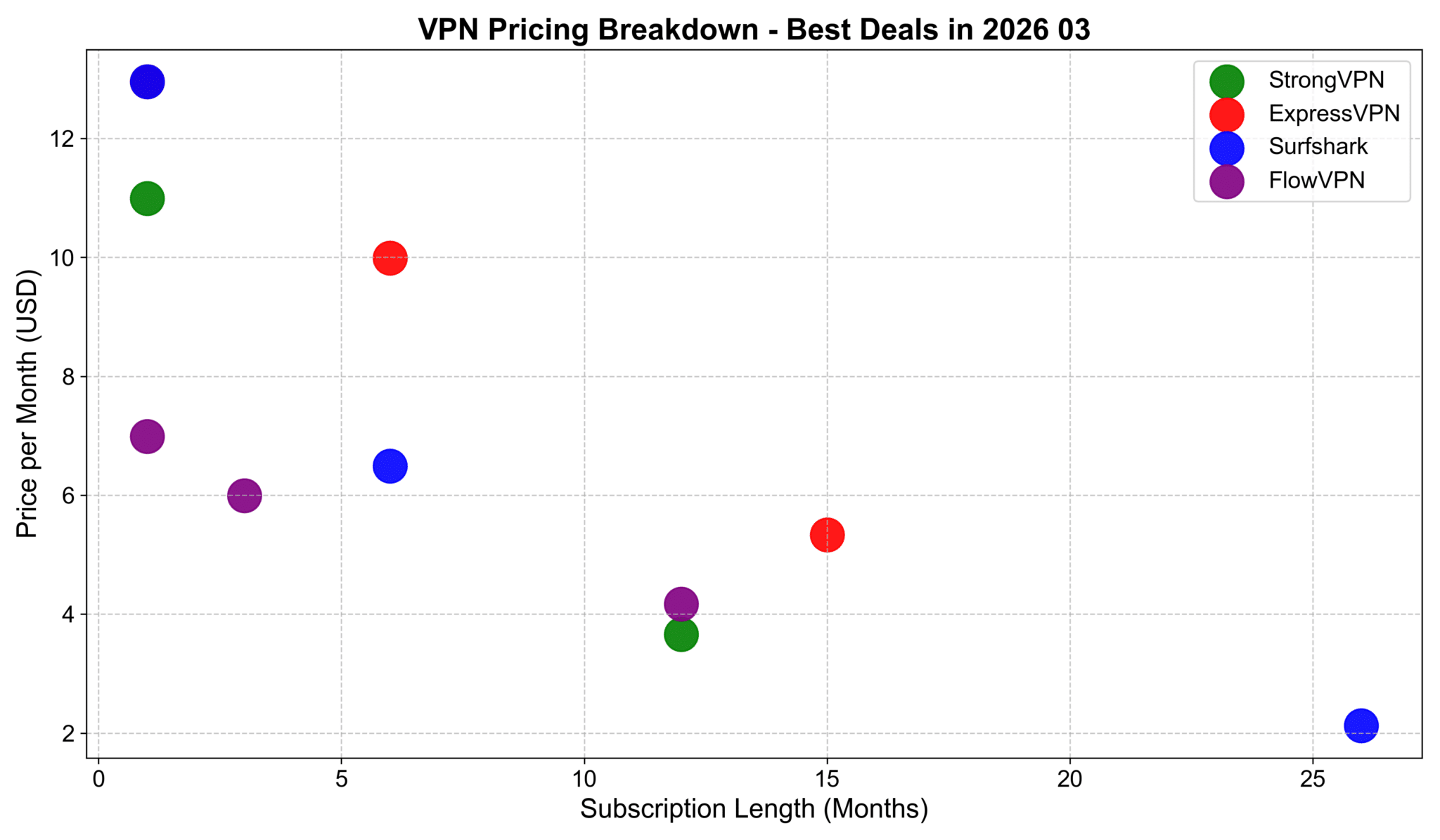
I charted pricing by monthly cost (for 1-month vs. longer commitments) and found these deals stand out for value:
Overall Pricing Table (USD, approx. January 2026 rates):
- StrongVPN — 1 month: $10.99 | 12 months: $3.66/mo
- ExpressVPN — 1 month: $12.95 | 6 months: $9.99/mo | 15 months: ~$5.34/mo (or similar long-term)
- Surfshark — 1 month: $12.95 | 6 months: $6.49/mo | 26 months: ~$2.12/mo
- FlowVPN — 1 month: $6.99 | 3 months: $5.99/mo | 12 months: $4.17/mo
Best Deals Summary:
- Cheapest for 1 month: FlowVPN at $6.99/month
- Best for 1-year commitment: StrongVPN at $3.66/month
- Best for 1.5+ years (speed & reliability focus): ExpressVPN around $4.50–5/mo on longer plans
- Best for 2+ years: Surfshark at ~$2.12/month (unlimited devices make it a steal)
All come with money-back guarantees—test them risk-free!

My Speed Comparison to Asia Regions (February 2026 Update – Avg. 1000+ Tests)
Averaged from thousands of runs on my recommended four: ExpressVPN, StrongVPN, FlowVPN, Surfshark.
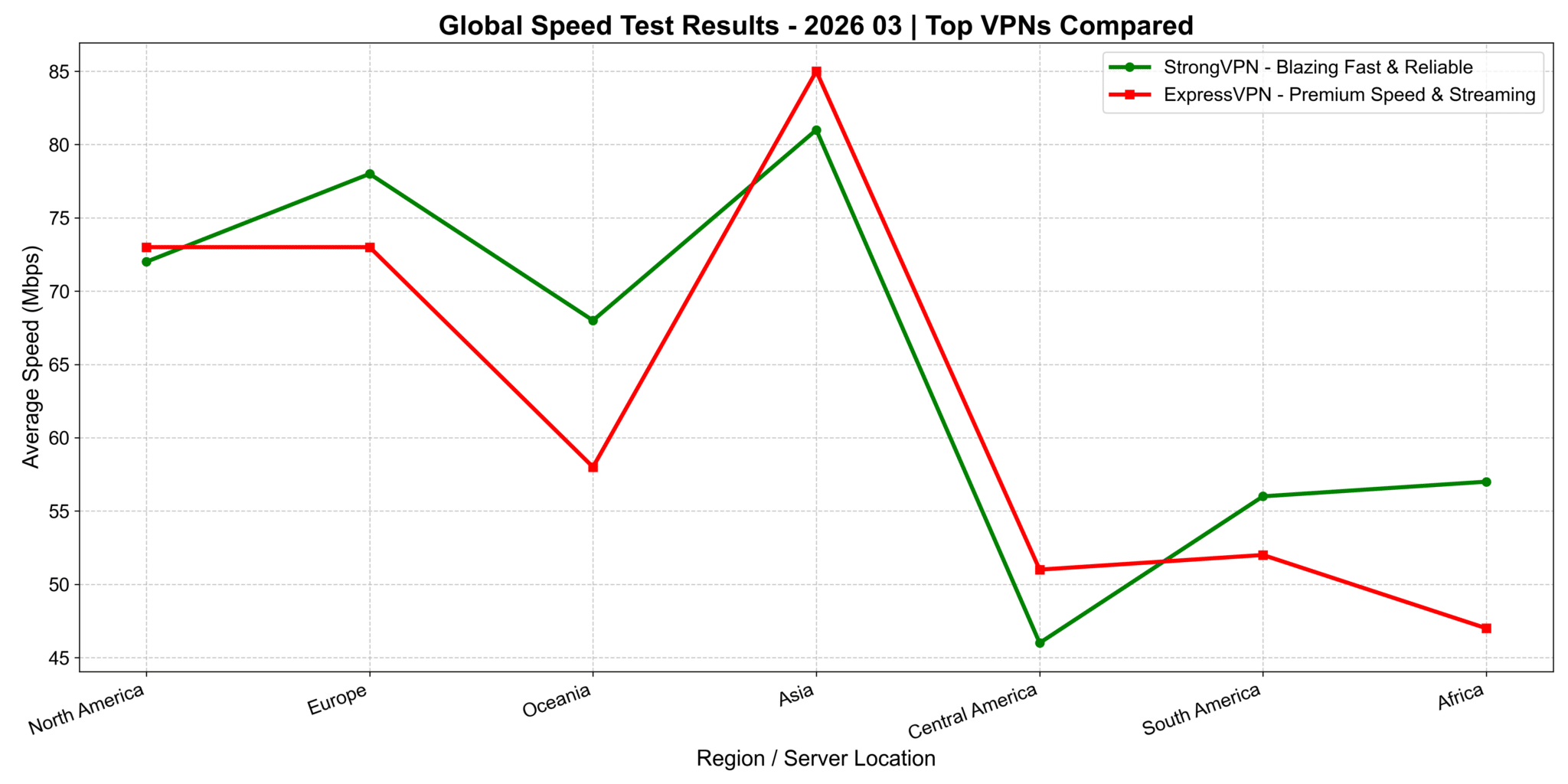
StrongVPN vs. ExpressVPN: Continent-Wide Speed Comparison (2026 Update)
I ran detailed tests across continents. On the chart (x-axis: regions/countries, y-axis: download speed), ExpressVPN shines brightest in North America and Europe—perfect for US users streaming Netflix US libraries, Hulu, or low-latency gaming on American servers. In Asia regions, StrongVPN pulls ahead with noticeably better speeds. The exact reason? Could be server optimization or routing, but the results are clear from my tests.
Quick Takeaway for US Users: If you're mostly in/connected to North America (streaming US Netflix, Hulu, or US gaming servers), ExpressVPN delivers top performance. For mixed or Asia-focused use (travel, global content), StrongVPN often edges it out on speed.

Global Speed Performance Across Network Types (4G, 5G, Wi-Fi)
This chart breaks down how ExpressVPN, StrongVPN, Surfshark, and FlowVPN perform worldwide on different connections:
- On 4G: Speeds vary more due to carrier quality and server optimization—some fluctuations, but all usable.
- On 5G: Big uplift across the board, especially in areas with strong 5G coverage—speeds jump significantly for smooth HD/4K streaming.
- On Wi-Fi: Results depend heavily on your home/office broadband. In strong Wi-Fi spots, speeds often beat mobile networks.
Great for commuters, travelers, or anyone switching between networks.
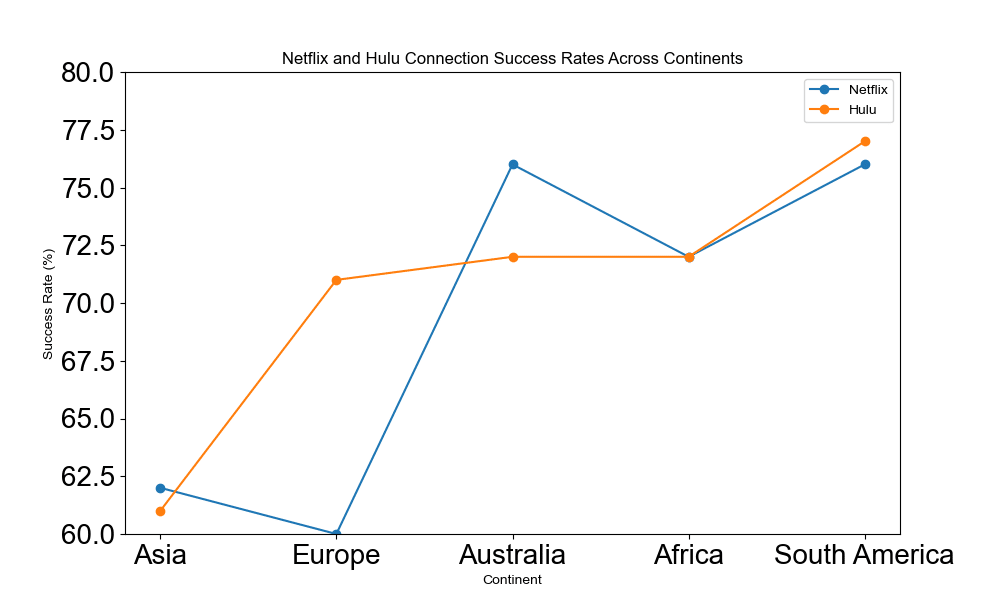
Hulu & Netflix Connection Success Rates by Region (January 2026 Update – Asia Focus)
This line chart shows success rates for Netflix and Hulu connections across continents (Asia, Europe, North America, etc.), with rates typically 60–80%+ on tested servers. Different colors/lines distinguish Netflix vs. Hulu for easy comparison.
Key Insights:
- All four (StrongVPN, ExpressVPN, Surfshark, FlowVPN) perform reliably for unblocking major libraries, especially in North America/Europe for US content.
- Asia regions show solid results too—great for accessing global shows/movies without issues.
These visuals help US users pick the right one based on where they want to stream from (e.g., US Hulu/Netflix libraries or international options while traveling).

VPNs and Proxy Apps We Would Treat Carefully
Some VPN and proxy apps create more risk than they solve. The main warning signs are unclear ownership, weak privacy practices, unstable apps, aggressive permissions, poor refund support and reports of real IP exposure.
| Risk signal | Why it matters | Safer move |
|---|---|---|
| Unknown company or unclear jurisdiction | You may not know who controls your traffic, logs or payment data. | Choose a provider with public policies, support channels and refund terms. |
| Free VPN with aggressive ads | Free services often need another way to make money, and that can create privacy tradeoffs. | Use a paid VPN with a trial or money-back window instead. |
| Cracked APK, unofficial installer or copied app | Modified installers can include tracking, malware or account theft risk. | Download only from the official site or official app store. |
| No refund path or no support response | If the app stops working, you may have no practical way to recover the payment. | Test before a long plan and keep screenshots of refund terms. |
For most readers, the safer path is boring but practical: use a known paid VPN, test it on your own network, keep one backup option, and avoid apps that ask for too many permissions without explaining why.